
An integrated, cloud-based enterprise resource planning (ERP) system that offers versatile and user-friendly functionality. It integrates easily with third-party solutions while supporting efficient operations with advanced, cutting-edge artificial intelligence (AI) capabilities.
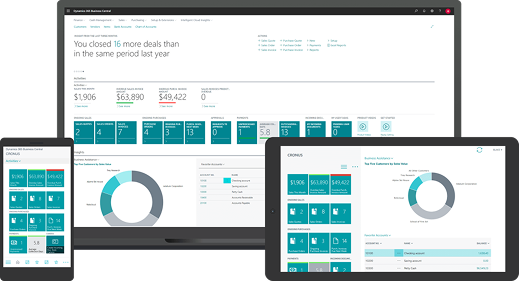
Microsoft Dynamics 365 Business Central is a modern enterprise management platform that supports efficient operations. It is built on Microsoft’s entire ecosystem, which provides a significant advantage over other ERP solutions. As a result, integration with Microsoft and other third-party systems is faster and more efficient. The system can be easily connected to banking solutions, EKÁER, company information systems, and many other solutions. Customized add-ons and AI-based features further enhance operational efficiency, an area where Microsoft leads the way.
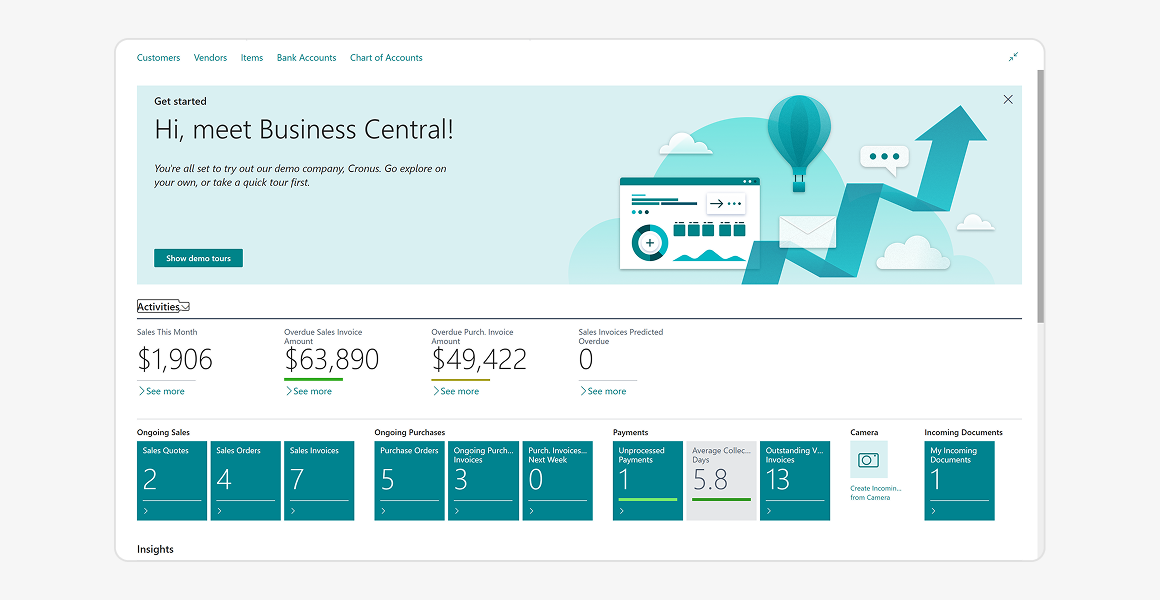

Microsoft Dynamics 365 Business Central is an integrated, modular enterprise resource planning (ERP) system that manages all aspects of a company’s operations on a unified platform—from finance and accounting, through sales, procurement, and inventory management, all the way to project management, manufacturing, and service processes. The system’s modules work closely together, ensuring real-time data and transparent operations, while offering flexible scalability to meet the specific needs of each company. However, the true power of Business Central lies in its ecosystem: it integrates natively with other Microsoft Dynamics 365 solutions, as well as with Microsoft 365 (Outlook, Excel, Teams) and Microsoft Power Platform tools, thereby supporting automation, data-driven decision-making, and efficient collaboration.
Microsoft Dynamics 365 Business Central licensing is designed to flexibly adapt to the varying needs of businesses, offering a variety of deployment and usage options. The most common is the cloud-based (SaaS) model, where the system runs on Microsoft’s infrastructure, is available via subscription, and includes operation, updates, and security. In contrast, the on-premises solution runs on your own server, providing greater control over data and the system, but requires a higher initial investment and ongoing IT resources. Hybrid and transitional solutions are also available between these two approaches, supporting a phased transition or specific operational needs. Licensing is also scalable at both the user and functionality levels, allowing companies to choose exactly the access and capabilities they need.


Microsoft Dynamics 365 Business Central offers advanced security and compliance solutions that help companies operate within a strict regulatory environment, including compliance with the requirements of the General Data Protection Regulation (GDPR) and the NIS2 Directive. The system is built on Microsoft’s cloud infrastructure, which protects business data with a multi-layered security model, advanced encryption, role-based access management, and continuous monitoring. Built-in auditing and logging features provide transparency into system usage, while regular updates and security patches ensure up-to-date protection.
Microsoft Business Central features a modern, user-friendly interface that provides a consistent experience across various devices—desktops, tablets, and mobile phones. Its responsive design allows users to access the system from anywhere, at any time. Its innovative features include a customizable interface, role-based home screens, and quick search and navigation options. The system can be integrated with tools such as Microsoft 365 and Teams, making daily work even smoother. Built-in automations, notifications, and AI-powered features (e.g., Copilot) further enhance efficiency and the user experience. All of this makes Business Central a flexible, modern, and easy-to-use enterprise management solution.
The default roles can be further customized to meet specific needs.
If needed, completely custom, developed roles can also be created. Permissions can be controlled using permission groups, even at the page and table levels. Administrators can precisely define what data and functions users can access.
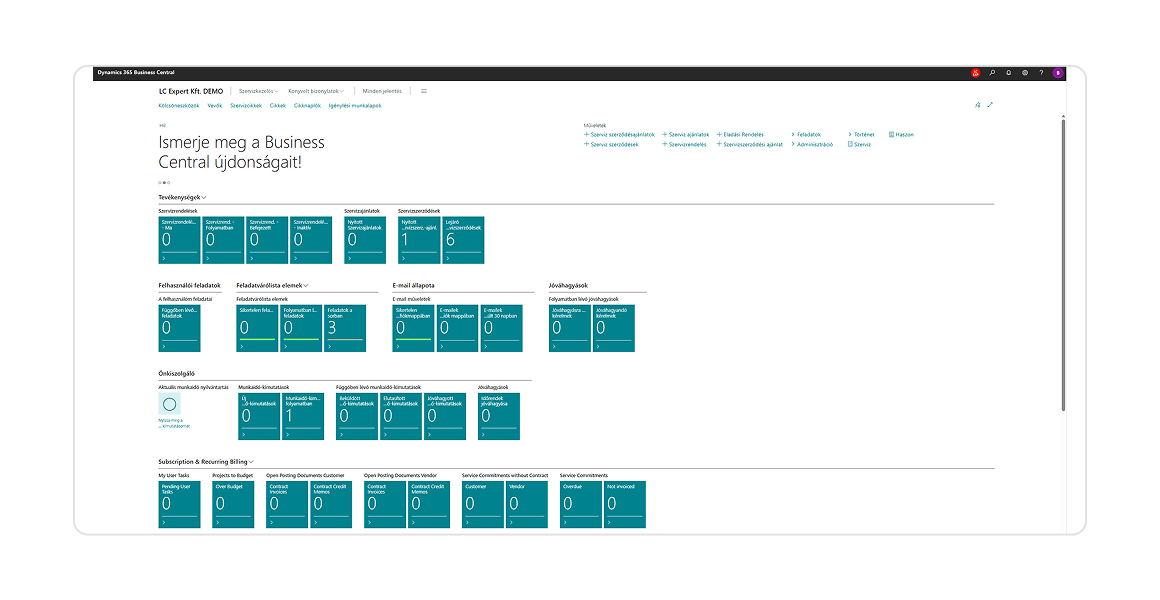
Microsoft Dynamics 365 Business Central allows for detailed and flexible customization of user permissions. The system offers role-based functionality with predefined profiles, such as for accountants, project managers, or sales representatives. These roles determine users’ access and menu options. The default roles can be further customized to meet specific needs.
If needed, completely custom, developed roles can also be created. Permissions can be controlled using permission groups, even at the page and table levels. Administrators can precisely define what data and functions users can access.
Microsoft Dynamics 365 Business Central Copilot AI is a built-in intelligent assistant that automates daily administrative tasks and supports faster decision-making. It helps generate product descriptions, create reports and data analyses, and make business forecasts. Integrated into the Microsoft ecosystem (e.g., Excel, Outlook, Teams), it is also available in natural language. Using it can reduce manual work and significantly increase efficiency.

To accommodate the specific characteristics of various corporate structures and business processes, we offer several Microsoft Dynamics 365 Business Central implementation packages designed to facilitate fast and efficient implementation based on predefined parameters, tailored to your specific operational model.
We compared various popular solutions from a business and operational perspective, as it is important for companies to gain a comprehensive overview of the available ERP and business management solutions and select the system that best suits their needs.

Comprehensive financial management, general ledger, accounts receivable management, and reporting. Supports multidimensional accounting and real-time financial analysis.
Planning of manufacturing processes, capacity management, and production tracking. It supports material requirements planning (MRP) and cost control.
Inventory management, transaction processing, and optimization of warehouse processes. Supports the management of multiple warehouses and locations.
Automation of procurement processes, order management, and supplier management. It helps optimize inventory levels and plan replenishment.
Basic HR functions, employee data management, and attendance tracking. Simplifies HR administration and reporting.
Organization, archiving, and retrieval of documents. It supports digital administration and paperless operations.
Manage service processes and track work orders and maintenance tasks. Supports customer service and repair operations.