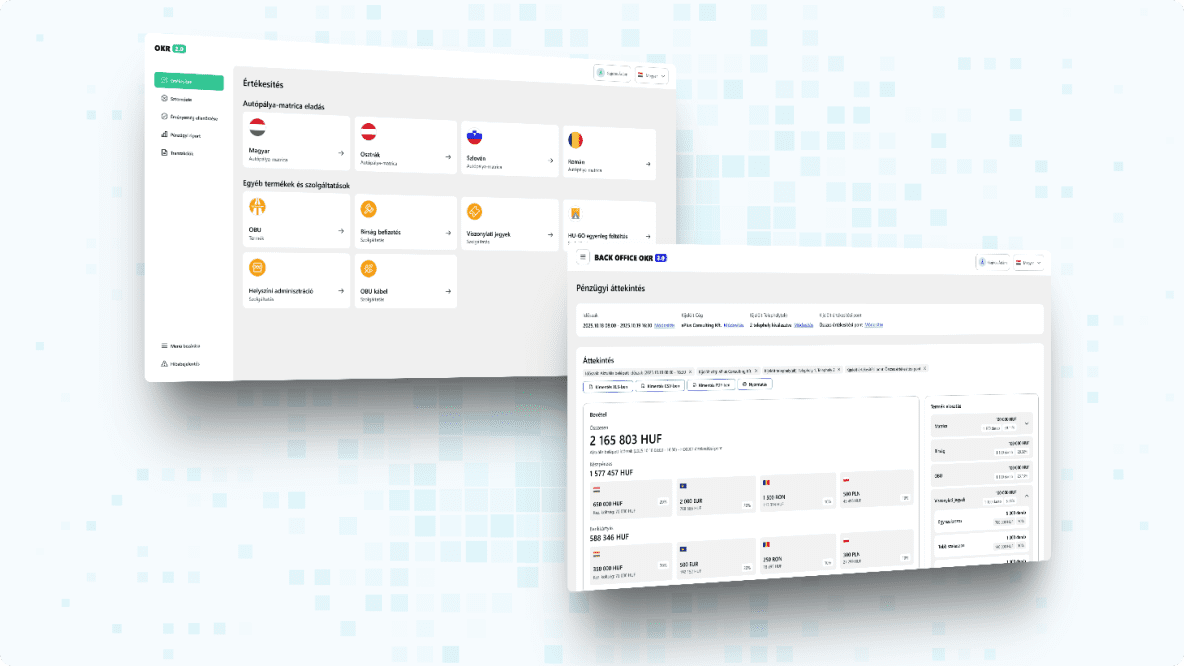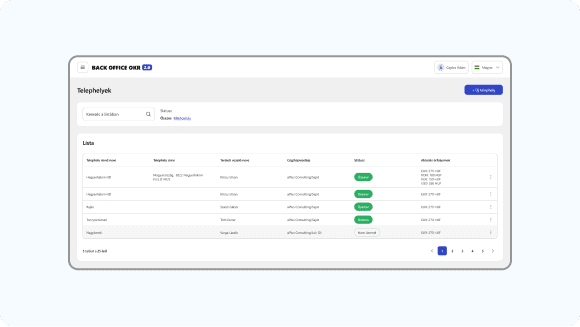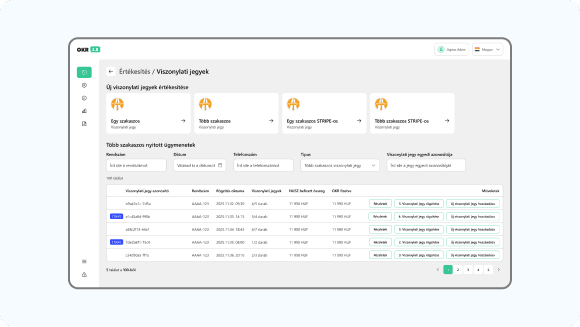
Redesigning processes from the ground up. Implementing a modern, integrated point-of-sale system.
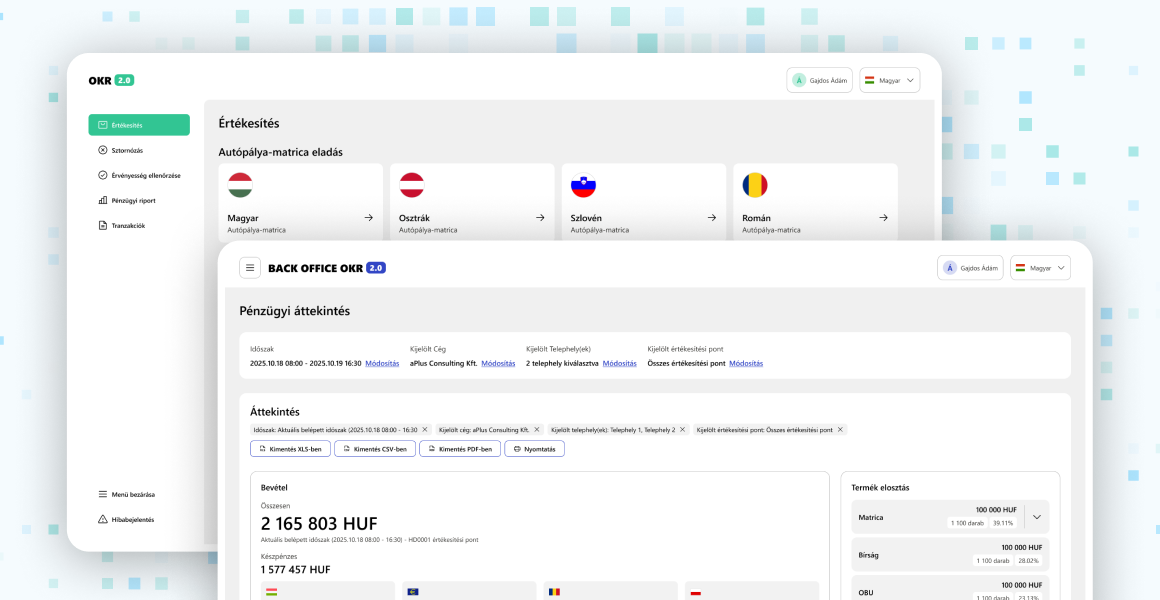
The goal of the project was to transform a previously fragmented sales environment into a unified, integrated point-of-sale system. Initially, the parallel use of multiple separate systems (cash registers, invoicing, bank terminals, and other external services) slowed down processes, increased the likelihood of errors, and placed a significant burden on sales staff.
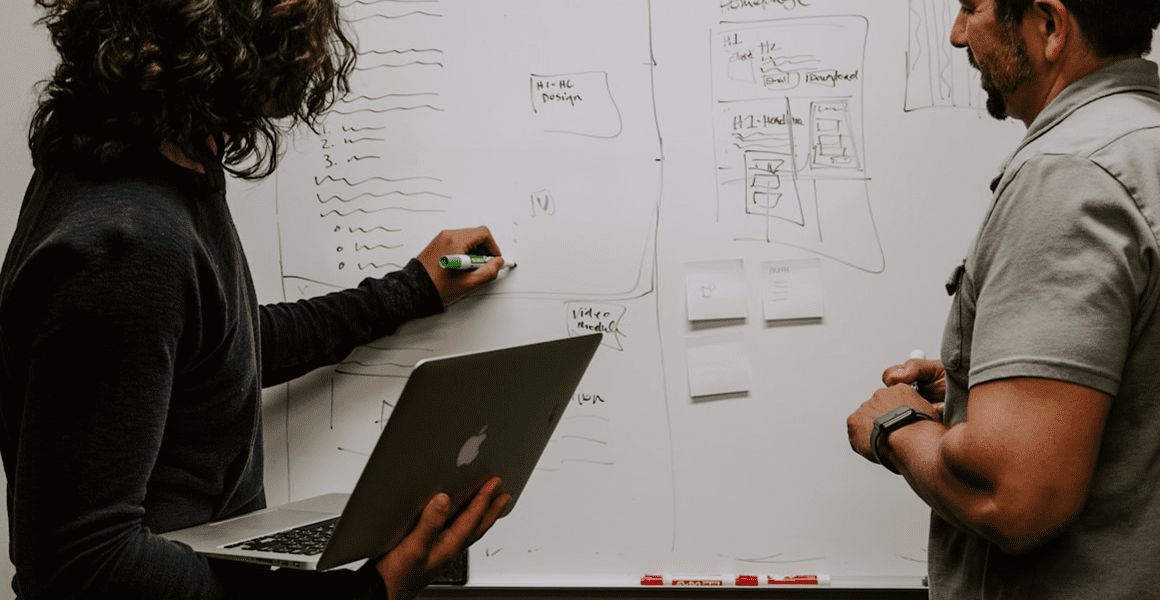

One of the biggest challenges of the project was integrating the needs of multiple stakeholders into a unified system. Sales representatives, regional managers, team leaders, and accounting departments all had different operational workflows, expectations, and information requirements. We defined these needs separately and then had to harmonize them into a common platform while also optimizing existing processes. This posed a significant organizational and cultural challenge, as the introduction of any new system brings about change that users must adapt to.
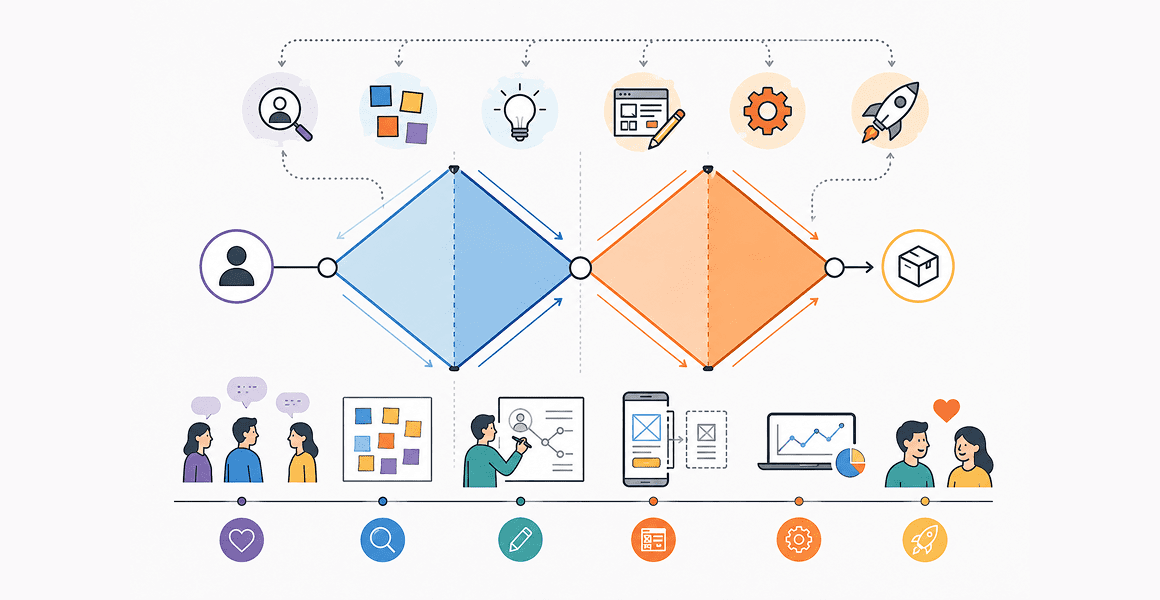
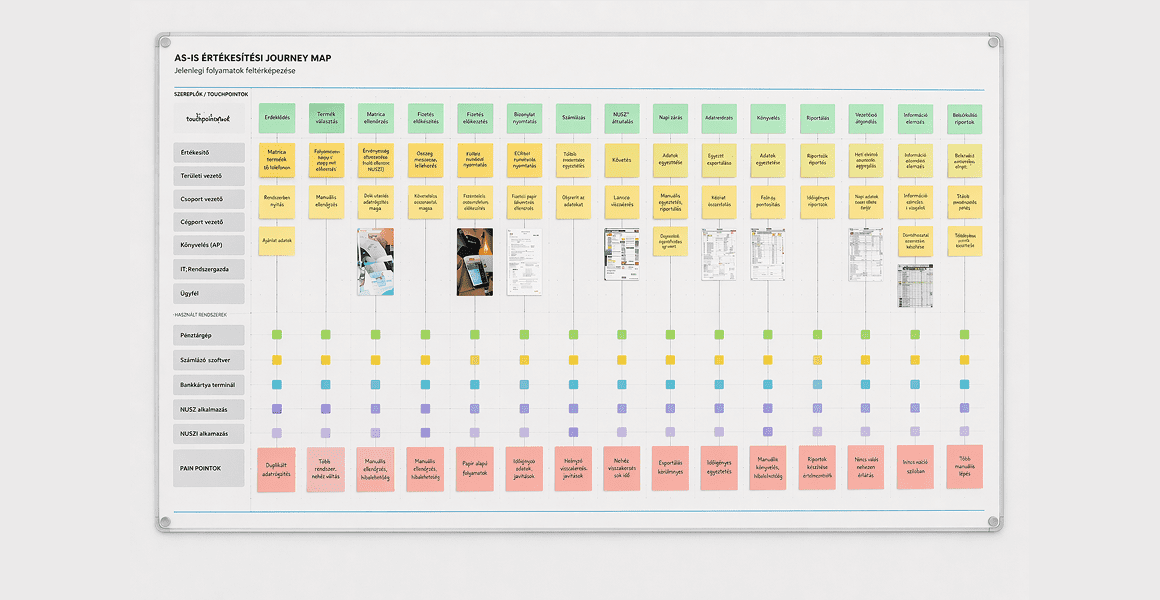
During the research phase, we conducted structured interviews with all relevant stakeholders, which allowed us to map out the current operational processes in detail. We visualized the end-to-end processes (customer journeys) associated with each system, including the entire operational chain of existing siloed solutions, and then identified and prioritized critical pain points. In parallel, we assessed the technological and physical (on-site) constraints that influence system operations. As part of a market benchmark analysis, we examined the operation of POS systems available on the market, as well as domestic accounting and regulatory requirements. We then synthesized the research results, during which we developed functional requirement lists and conceptual, optimized (to-be) process models, laying the groundwork for the design and development phases.
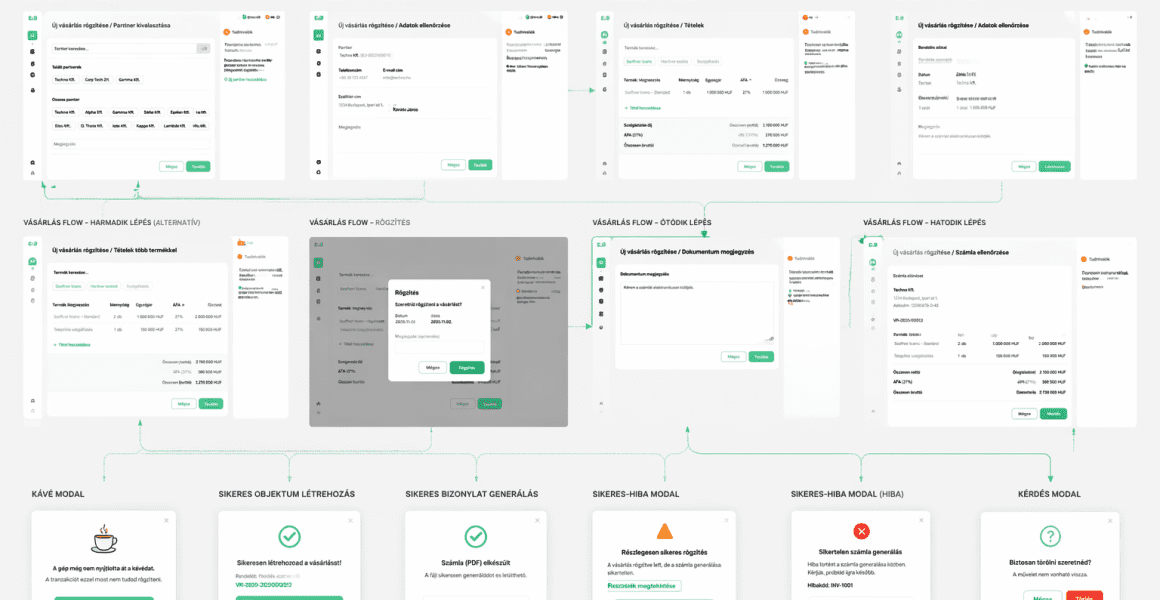
During the design phase, we created wireframes and interactive prototypes. We tested these iteratively with the involvement of all stakeholders, ensuring that the needs of the various roles were adequately reflected in the system. Interfaces and integrations posed a significant challenge during development: we had to connect several separate systems according to a unified logic, ensuring real-time data flow and data consistency.