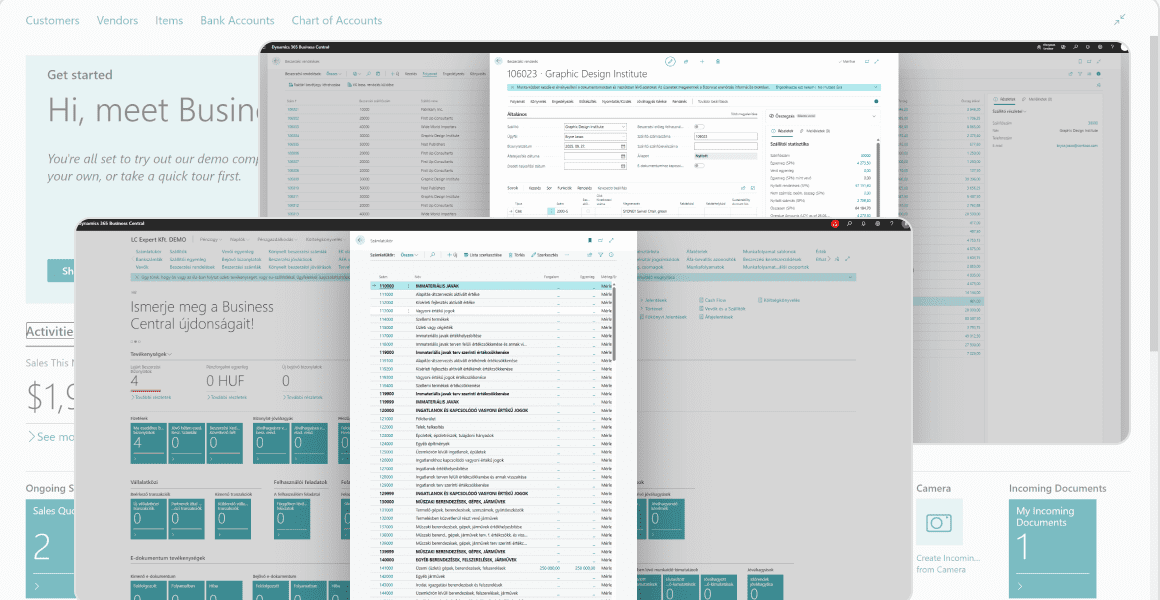

Why is Microsoft Dynamics 365 Business Central the ideal choice for small and medium-sized businesses?
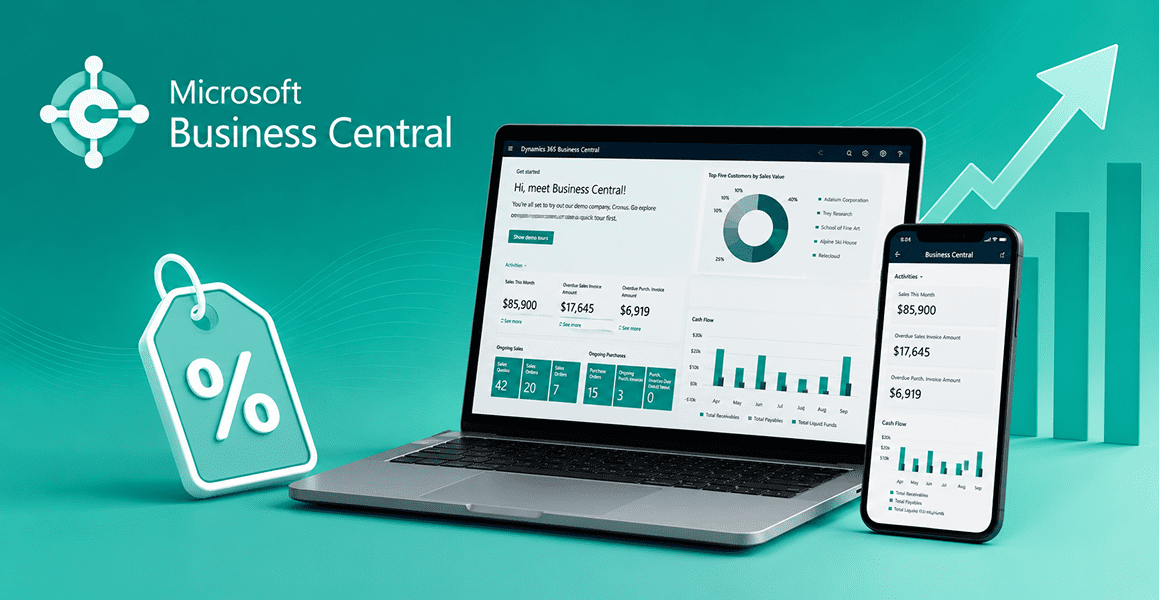
An ERP (Enterprise Resource Planning) system is an integrated business solution that manages a company’s most critical processes—such as finance, inventory management, procurement, sales, project management, and even reporting—on a single platform. Its goal is to provide the company with a unified, transparent, and automatable operation instead of separate systems and manual processes.
Microsoft Dynamics 365 Business Central is Microsoft’s modern, cloud-based ERP system, developed specifically to meet the needs of small and medium-sized businesses. Many companies still believe that an advanced enterprise resource planning system is available only to large corporations and comes with high costs. However, Business Central can now be implemented in cost-effective packages that make innovative technologies, automation, and AI-driven operations accessible to the SME sector as well.
Because the system is cloud-based, there is no need to build out extensive infrastructure or maintain your own servers. In addition, Business Central integrates seamlessly with the Microsoft ecosystem—such as Microsoft 365, Teams, and Power BI—providing your company with a stable, secure, and continuously evolving digital platform to support its growth.
Many lower-cost ERP systems may seem like an attractive option at first glance, but they often have limited integration and customization capabilities. With these systems, the company often has to adapt to the software, rather than the other way around. Business Central, on the other hand, can be flexibly tailored to the company’s operations while seamlessly integrating with other systems, online stores, CRM solutions, or even AI-based applications. Integration into the Microsoft ecosystem ensures faster communication, better data management, and more transparent operations. This results in significant time and cost savings in the long run.
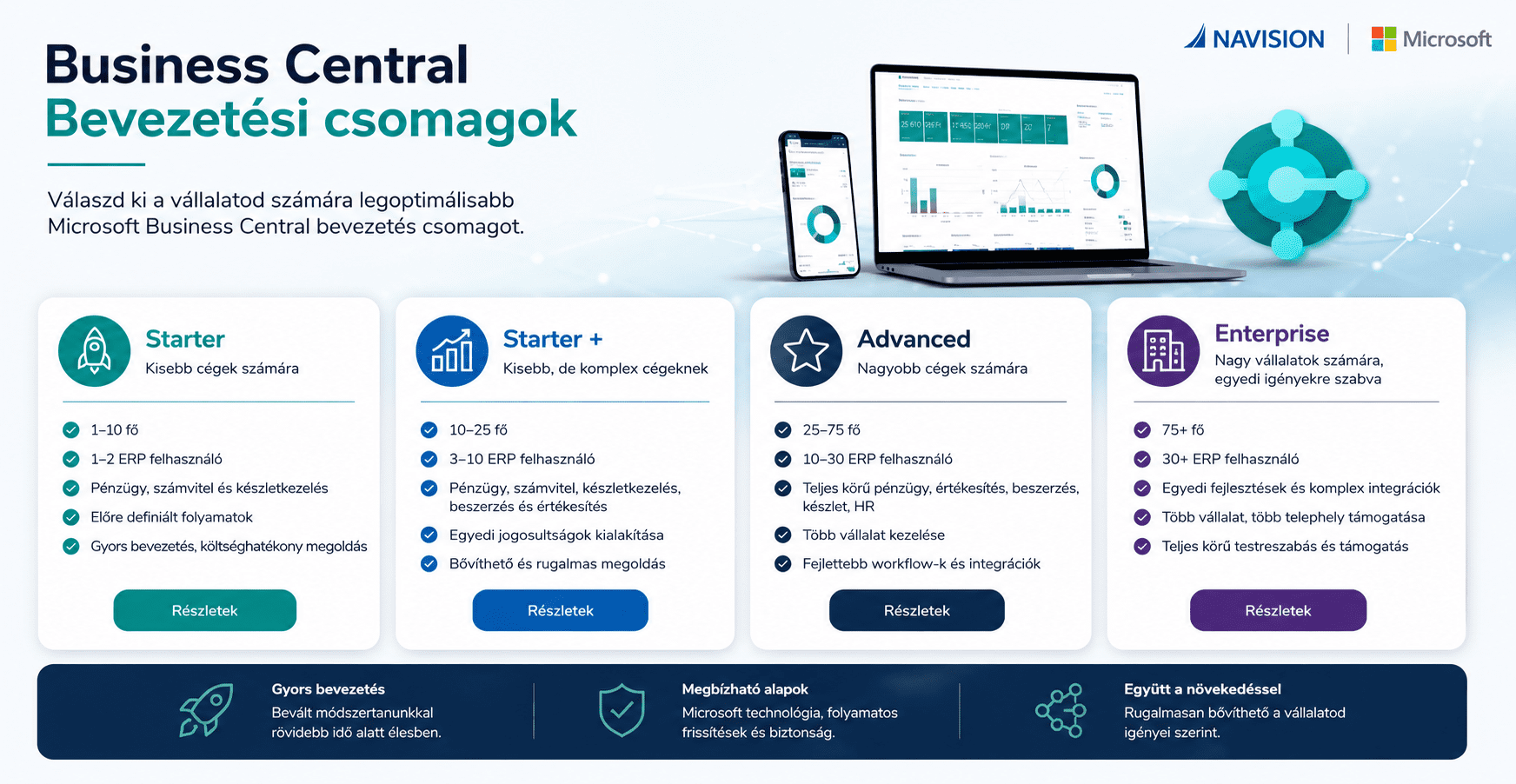
The Starter and Starter+ packages are designed for smaller companies that, in addition to financial and inventory management processes, also have sales and procurement needs. The package is typically ideal for companies with 10–25 employees, supporting 3–10 users and managing up to 1,000–10,000 items. It is recommended for companies that have already completed basic digitization and are looking for a more structured, future-proof ERP system. The system supports growth while keeping implementation predictable and cost-effective.
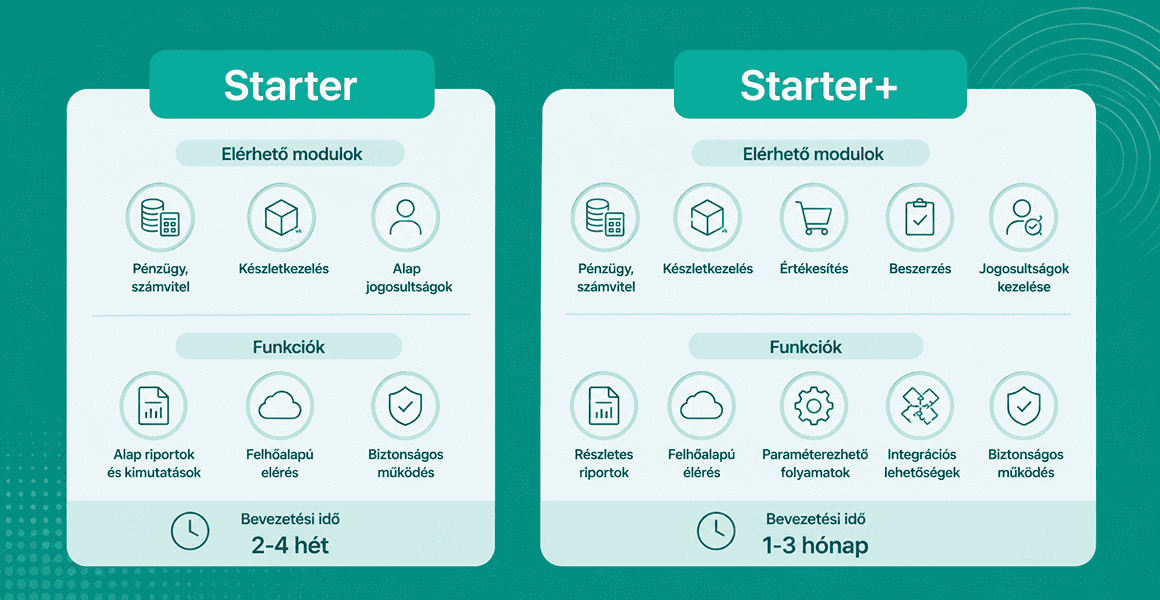
The Business Central Starter+ package is capable of covering a more comprehensive range of business operations. It includes support for finance, accounting, inventory management, and basic sales and purchasing. The system allows for the use of predefined or even custom chart of accounts, as well as the creation of custom permission structures. In addition to the standard default settings, controlled custom developments can also be implemented, allowing the system to be tailored to the company’s operations. Furthermore, the cloud version includes Microsoft Copilot AI features, which enable faster workflows and intelligent automation.
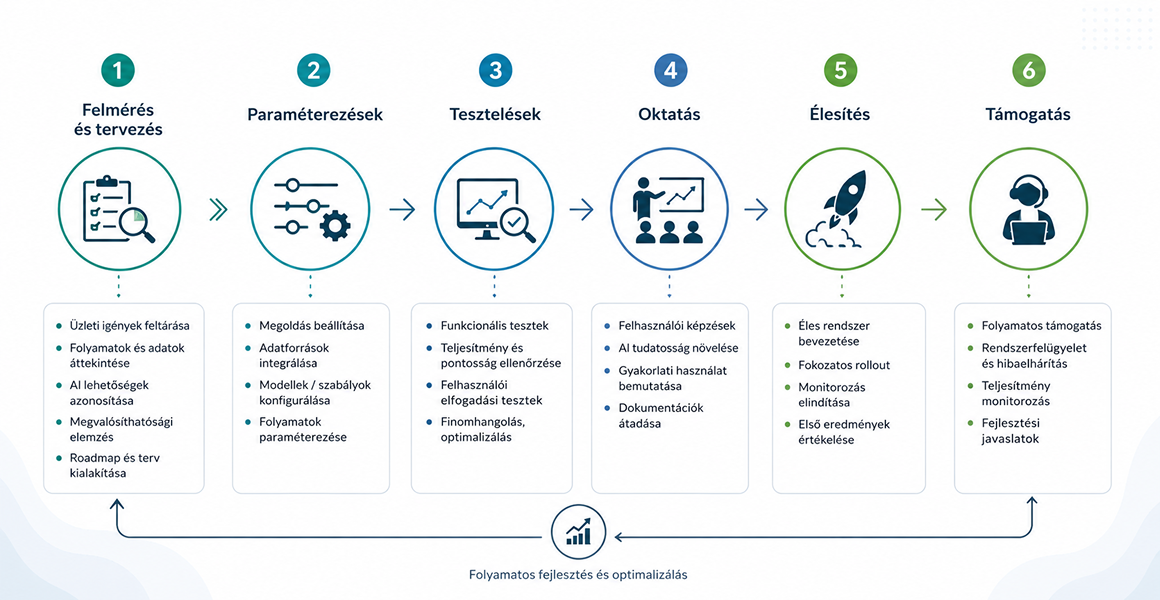
One of the biggest advantages of the Starter and Starter+ packages is that the implementation process is easy to plan and can be carried out quickly. From preparation to go-live, it includes data migration, training, and basic integration capabilities. Data migration focuses primarily on transferring master data, but it is also possible to connect external systems. The typical implementation time is 1–3 months, which may be ideal for companies that, despite rapid growth, do not want long and risky ERP projects.
When operating in Hungary, it is of paramount importance that the ERP system complies with local legal and tax requirements. The Hungarian localization of Business Central supports the Hungarian Accounting Act, VAT management, and local financial reporting structures. The system can connect to the NAV Online Invoice system, allowing electronic invoice data to be automatically transmitted to the NAV. Additionally, ÁNYK-compatible XML export is supported, for example, for 65A and 65M tax returns. This significantly reduces administrative burdens and minimizes the potential for errors.
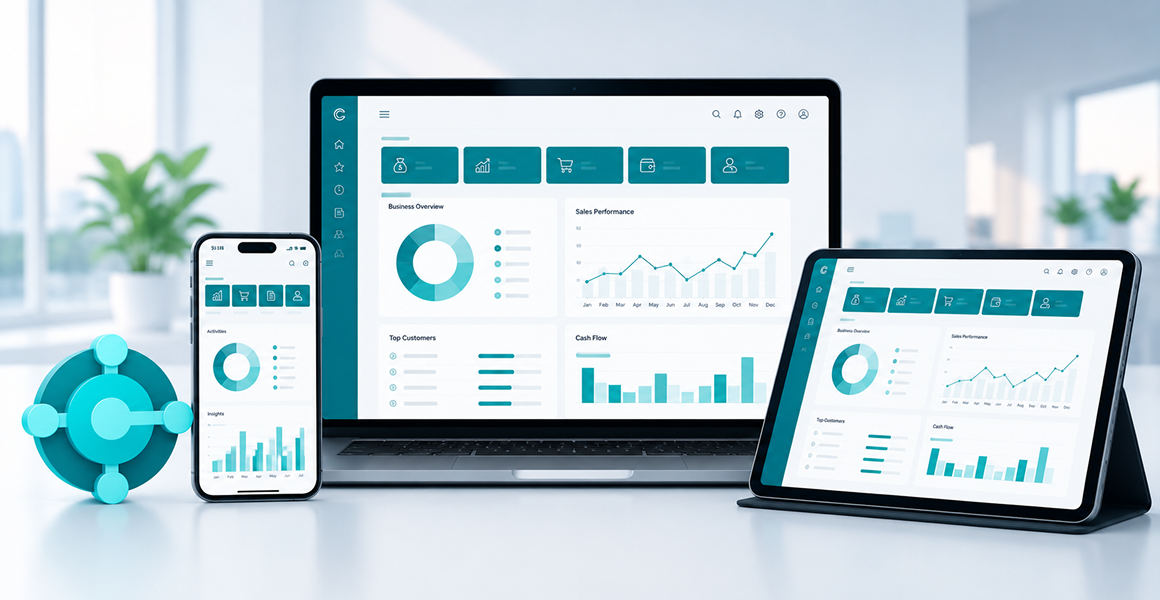
Modern business management today involves not only data management but also intelligent operations. Business Central integrates seamlessly with Microsoft 365, Teams, Power BI, and Power Automate, enabling the creation of a complete digital ecosystem. Microsoft Copilot’s AI features support automated reporting, forecasting, and faster information processing. The system is accessible from smartphones, tablets, and laptops, ensuring flexible and modern workflows for every role.
One of the biggest advantages of Business Central is that it makes modern enterprise management technologies accessible even to smaller companies. We have developed cost-effective packages tailored to company size, enabling SMEs to use an innovative, integrated system that can be scaled for the long term. Our goal is for companies to receive not just an ERP system, but a stable digital foundation for future growth and automation.

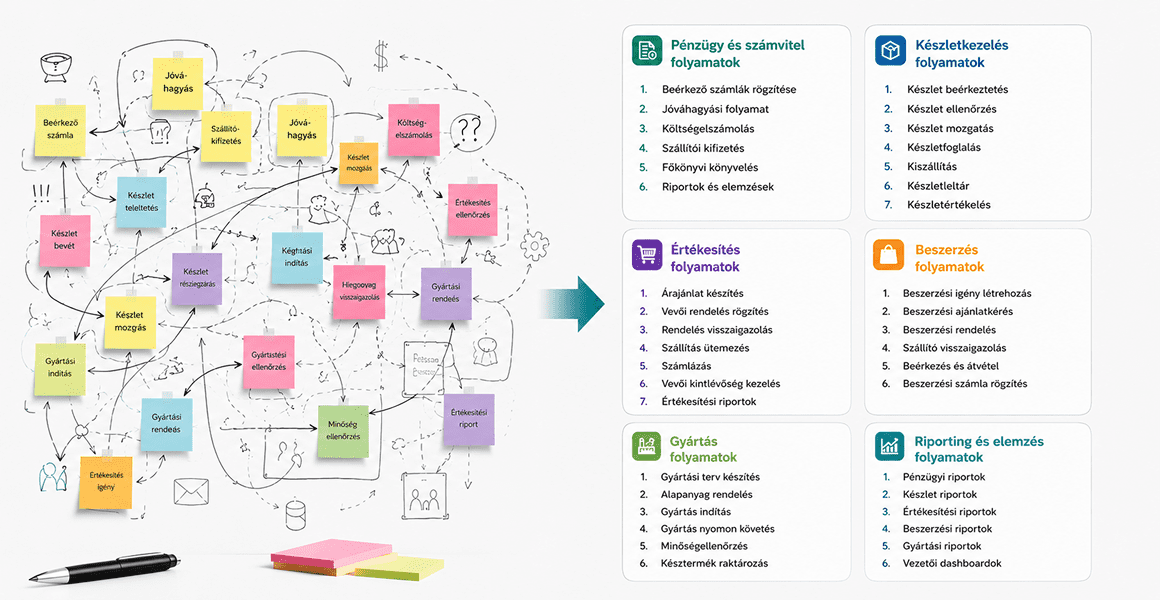
Before a company selects an ERP system, it is important to thoroughly assess its current operations. It is worth examining which processes have already been digitized and where paper-based or manual solutions are still in use. Many companies still rely on separate systems, Excel spreadsheets, or so-called siloed solutions to manage data, which slow down operations and increase the risk of errors. It is important to review what could be automated: for example, reporting, approvals, invoicing, or document management. It’s also worth noting which applications and platforms the company uses, where documents are archived and edited, how online meetings are conducted, and how colleagues retrieve information. The more relevant departments involved in the assessment, the more accurately the appropriate digital strategy and system environment can be developed.
Fill out our questionnaire, and our experts will show you—during a free consultation—how to assess your company’s actual needs, opportunities for growth, and the best digital strategies.